Community & Business
13 February, 2026
Community unites to improve local creek
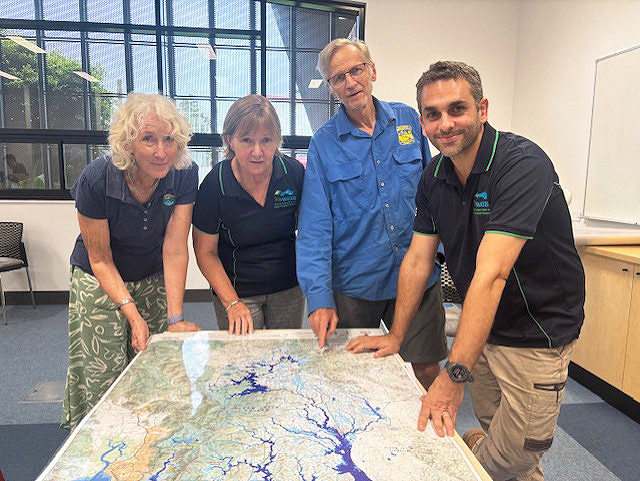
REPRESENTATIVES from more than 10 organisations came together to share ideas and build a cooperative plan to improve water quality in Peterson Creek, which flows through Yungaburra.

The issue was first raised by Yungaburra Landcare after members noticed the seasonal disappearance of the creek’s iconic platypus, prompting 12 months of water sampling.
Laboratory results found faecal bacteria levels significantly above national guideline thresholds, and phosphorus levels above those considered safe for platypus habitat.
The recent workshop focused on practical, community-led actions and strong partnerships with local landowners and residents, recognising that lasting improvements would come from working together across the whole catchment.
Yungaburra Landcare representative Dermot Smyth said the outcome of the workshop was very positive, with broad agreement on a collaborative and respectful approach.
“We know that landowners, farmers and local residents are central to the future health of Peterson Creek, and we want this to be a supportive, solutions-focused partnership,” he said.
“Barron Catchment Care will set up a Peterson Creek Working Group of key partners to act as a communication channel between local residents, landholders and organisations.
“Water quality experts from James Cook University’s TropWATER Centre will draft a strategic document to give the working group a practical framework to move forward as a community-led initiative.”
“We believe the strategy will help attract funding, but there are also many actions we can take together that don’t rely on government grants.”
Barron Catchment Care Chair Bryony Barnett outlined the overall goal.
“Our shared goal is that in the future we will once again be able to clearly see the bottom of Peterson Creek – that’s a straightforward sign of good water quality and a healthy waterway,” she said.
“This is a relatively small catchment and the creek itself is only about 7km long. By working together with landowners and residents, Peterson Creek can become a practical demonstration site for improving water quality across the Tablelands.
“If we get it right here, we hope the same cooperative approach can be adapted in other catchments across the Barron River system.
“Our first step will be to meet with residents – especially long-term locals and property owners – to listen, learn from their experience, and better understand how the creek and catchment have changed over time.”
Representatives from more than 10 organisations attended the workshop, including Yungaburra Landcare, Tablelands Regional Council, Terrain NRM, Malanda Landcare, Barron Catchment Care, TREAT, Traditional Owners, James Cook University, Growcom and the School for Field Studies.
The Barron River received the lowest hydrology and habitat ranking of far northern rivers in the Wet Tropics Waterways Report Card 2025, highlighting the importance of coordinated local action.
The positive response to the Peterson Creek workshop is an indication that the Barron Catchment community is committed to meeting this challenge.