Community & Business
29 January, 2026
Drones may be answer to wildlife monitoring
HAVE you ever wondered about the challenge of monitoring wildlife who live in the canopy of rainforests?
Here in Far North Queensland we have many species who spend almost their entire lives in the canopy where they try hard not to be seen, especially by predators.
But there is a growing need to better understand presence or absence of species in our rainforests and to try and study population changes.
The first major issue is detecting the presence of a particular species in an area. A second big issue is how to study them way up in the canopy.
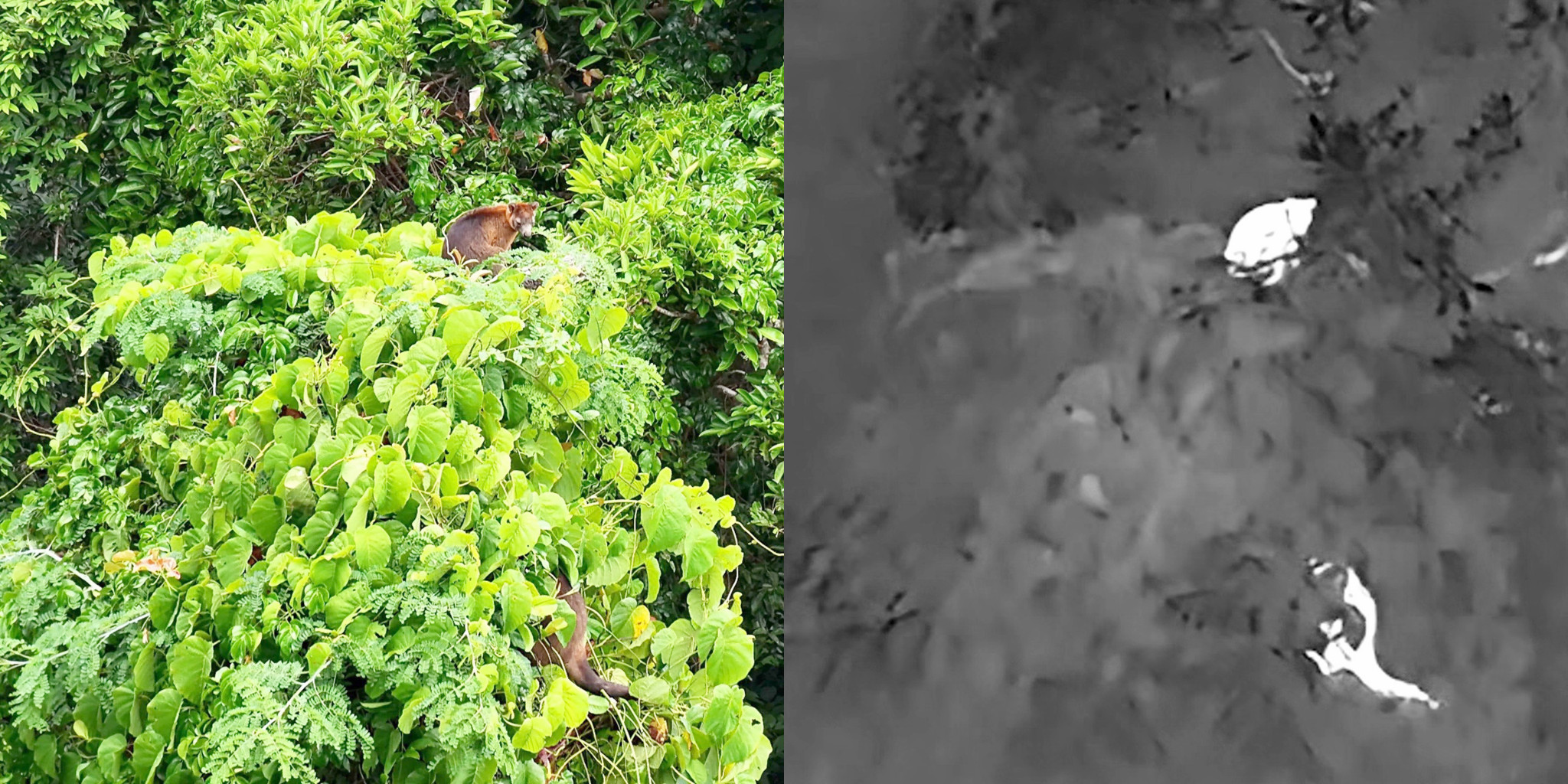
One possible solution might be to use drones to bring the sensor nearer to the canopy, as has already been shown to be useful by Dr Amy Shima and Roger Martin working on tree kangaroos and our northern koalas.
But for many other species simply discovering their presence is very difficult.
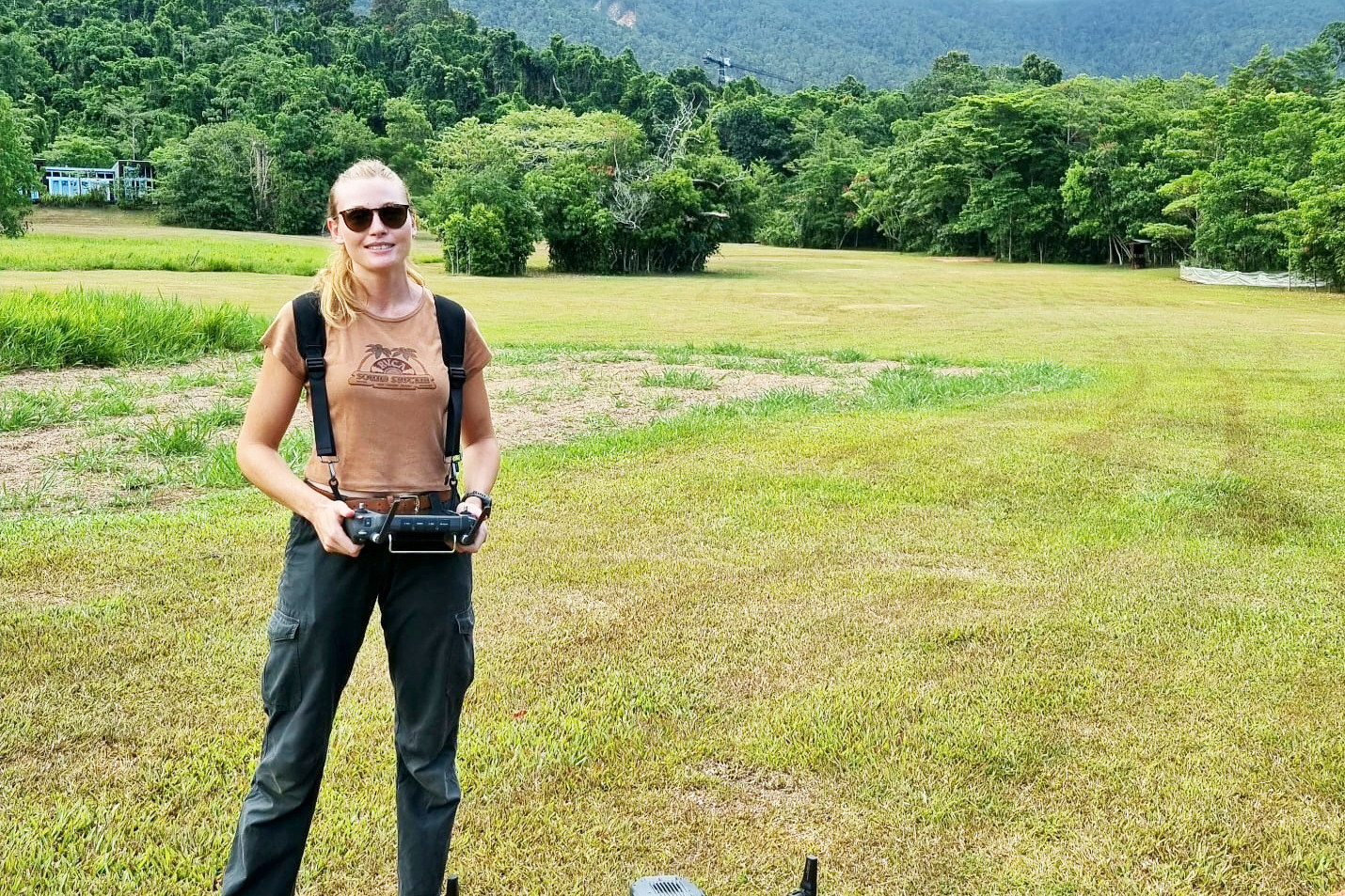
James Cook University PhD student, Emmeline Norris, is presently working on the potential of thermal imaging drones to support wildlife monitoring and her work will focus on several different species, including endangered Spectacled Flying-foxes, Mahogany Gliders and Lumholtz’s Tree Kangaroos.
The Tree Kangaroo and Mammal Group is hosting a free public presentation by Emmeline at the Malanda Hotel on Thursday 5 February at 7.30pm.
In the talk there will be a discussion about different species that might be suitable for such work and also different types of drones that might be valuable.
This should be a fascinating talk that shares novel drone technology and wildlife conservation interests. All interested people are welcome.