On The Land
1 May, 2026
Organic plan to reduce fertiliser costs
AS primary producers face rising fertiliser costs and supply chains remain uncertain, a Mossman-based company is helping to reduce reliance on global supply chains by working directly with growers to convert organic waste into usable fertiliser inputs.

Green Food Australia founder Jess Uhlig is stepping in with a local solution designed to support farmers now – while building more resilient soil systems for the future.
“More growers are asking what their options are if fertiliser becomes harder to access or too expensive,” she said.
“What we’re offering is a way to step in and support that gap – while also improving the underlying health of their soil.”
She said the model worked in two ways.
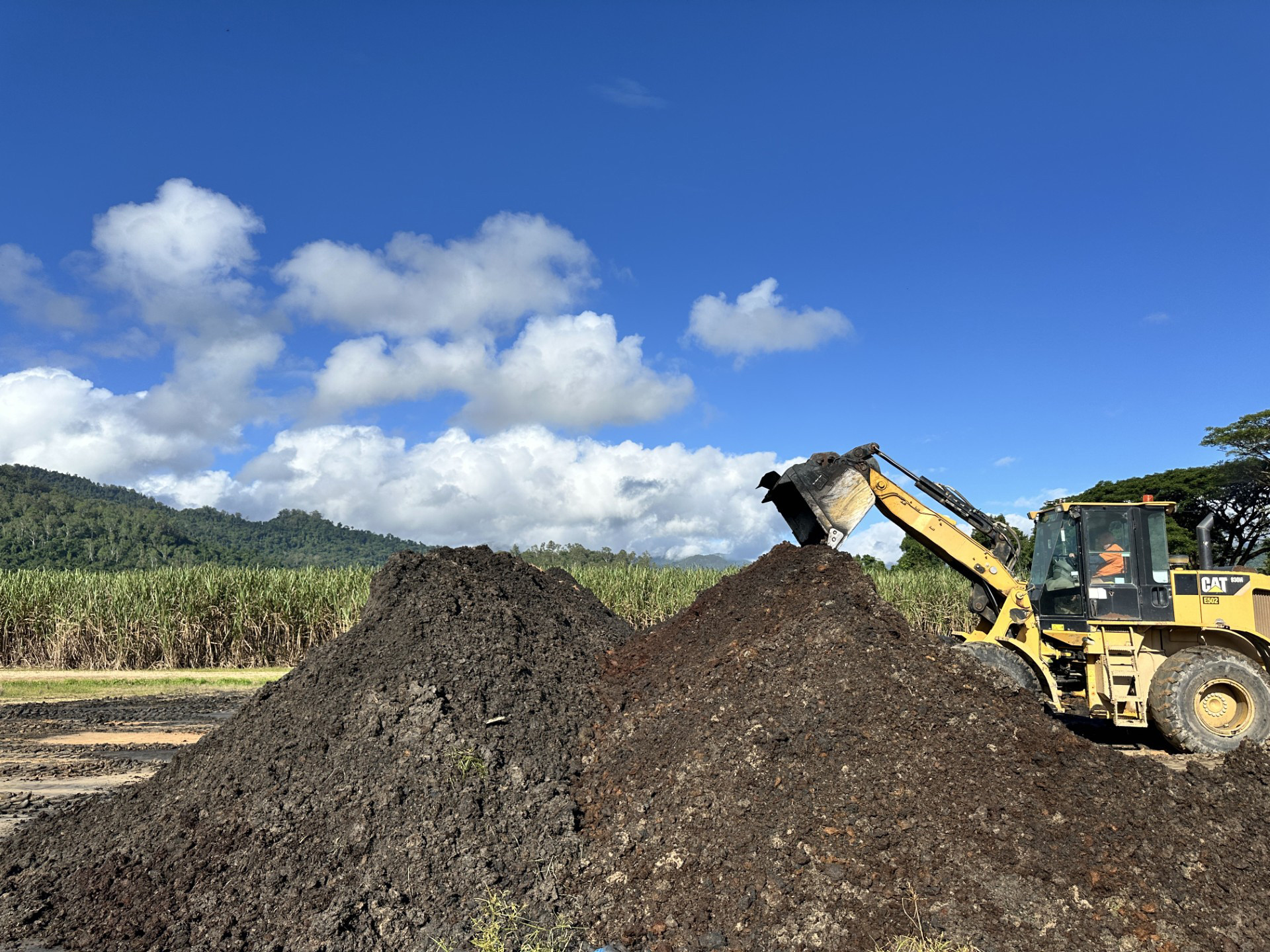
On farm, organic waste is converted into HumiSoil, a stable, humus-rich soil amendment that builds long-term soil structure and fertility.
At the same time, Green Food Australia produces customised liquid fertiliser blends, tailored to suit individual farming systems and crop requirements.
“Because both inputs are made from organic waste streams, we’re not reliant on imported products or global supply chains,” Ms Uhlig said.
“That means we can produce consistently, locally, and deliver when farmers actually need it.”
The approach was recently demonstrated on a banana farm in Tully, where organic waste was processed into HumiSoil and independently tested.
Lab results confirmed: 30% organic matter; 17.6% total carbon; strong humic and fulvic acid content; 100% plant germination and root growth and no viable weed propagules after 21 days.
The inputs are also aligned with Freshcare requirements, meeting key safety benchmarks for use in commercial agricultural systems.
Ms Uhlig said the results highlighted the opportunity to rethink both waste and fertiliser systems.
“This is material that would otherwise be discarded, now being turned into a consistent, biologically-active input that goes straight back into production,” she said.
While not positioned as a replacement for traditional fertiliser programs, the system was designed to complement existing inputs and reduce reliance over time.
“We’re not asking farmers to change everything overnight,” Ms Uhlig said.
“But we are showing that there’s a practical, local option that can step in when supply is uncertain – and at the same time build stronger, more resilient soil systems.”
The model also has broader implications for regional Australia, with the potential to keep nutrients within local areas, reduce waste to landfill, and support long-term food production.
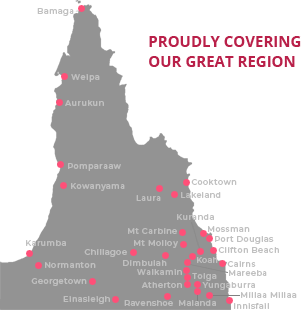
Green Food Australia is currently working with growers across Far North Queensland and has capacity to expand as demand increases.
Further information is available at info@greenfoodaustralia.com.au